K2‑SPRING Q-ENERGY Innovator Unit グリーンイノベーションユニット
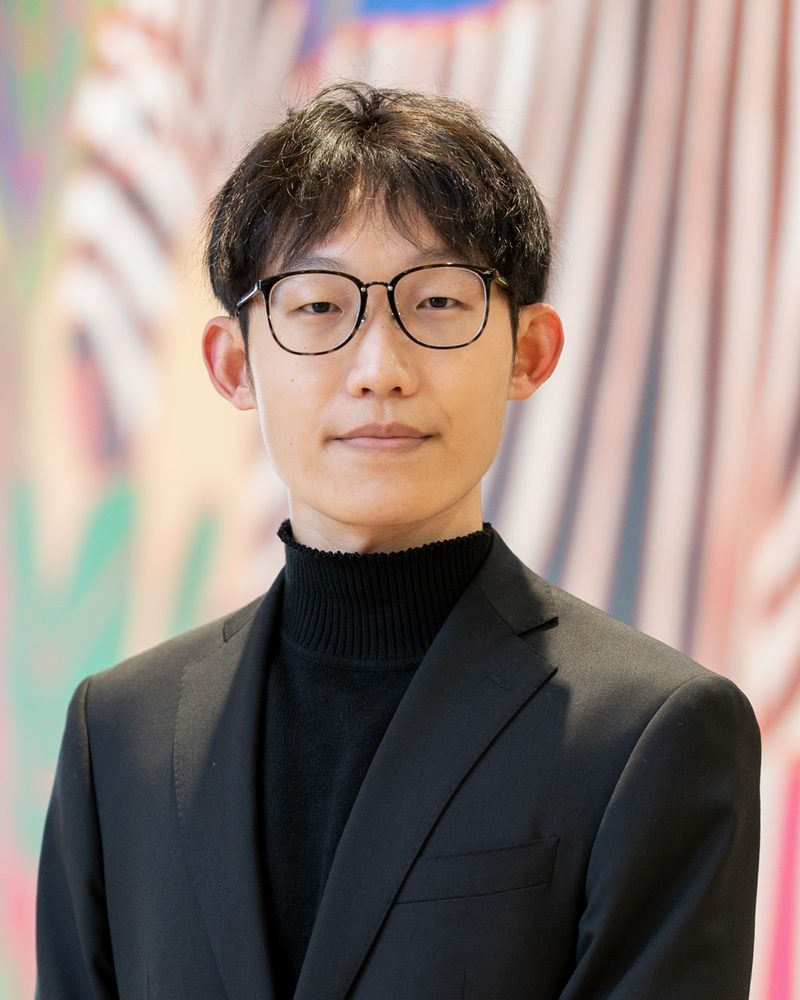
Yixin Chen Photo
chen_yixin.jpg
2022 Cohort 2022年度
Q-ENERGY Fellowship · Cohort 2022 Q-ENERGYフェローシップ · 2022年度

Yixin Chen

陳 伊新

Completed修了
Affiliation
所属
Interdisciplinary Graduate School of Engineering Sciences
総合理工学府
Major / Department
専攻
Department of Interdisciplinary Science and Engineering
総合理工学専攻
Supervisor
指導教員
Prof. Ken ALBRECHTアルブレヒト 建 准教授
§ 01

Doctoral research

博士 研究

Main PhD work 博士課程主研究

Construction of high-capacity all-solid-state battery using hydride negative electrode

水素化物負極を用いた高容量全固体電池の構築

So far, it has been clarified that when we use the high-capacity negative electrode materials such as Mg(BH 4 ) 2 , Ca(BH 4 ) 2 , and MgH 2 , solid electrolytes can be generated by electrode reaction. As the electrode reaction products of MgH 2 , LiH and Mg will form by Li insertion, and despite the low Li ion conductivity of LiH, it can be used as an excellent negative electrode of all-solid-state battery due to the self-generation of solid electrolyte. In this study, it is necessary to clarify the ionic conductivity of the formed Li salt and the three-dimensional distribution of reactants, products, and carbon in the electrode mixture during charging and discharging for the further understanding of the factor than affect the battery characteristic of the negative electrode that using the self-generated solid electrolyte.

これまで、Mg(BH4)2、Ca(BH4)2、MgH2といった高容量負極材料にLiイオンを挿入すると固体電解質が自己生成することを明らかにしている。MgH2はLi挿入によりLiHとMgを生成するが、LiHのLiイオン伝導度は低いにも関わらず、固体電解質の自己生成により優れた全固体電池負極として利用できる。本研究では、生成するLi塩のイオン伝導性や、充放電中の電極合材中の反応物・生成物・炭素の3次元分布を明らかにすることで、自己生成固体電解質を用いた負極の電池特性を決定する要因を解明する。
§ 02

Research achievements

研究 成果

Research Papers論文
  1. Inoishi A., Chen Y., Konishi R., Tsuneishi H., Tsubota T., Sakaebe H. “Observation of In-Situ Formed Electrolyte from TiH2 by SEM and Windowless EDS” Electrochemistry, Vol. 93, 063015 (2025) doi:10.5796/electrochemistry.25-71034
  2. Chen Y., Inoishi A., Okada S., Sakaebe H., Albrecht K. “In situ formation of an intimate solid-solid interface by reaction between TiH2 and molten sulfur” Journal of Magnesium and Alloys, Vol. 12, pp. 3193–3203 (2024) doi:10.1016/j.jma.2024.08.006
  3. Chen Y., Inoishi A., Okada S., Sakaebe H., Albrecht K. “TiH2-based anode: In situ formation of solid electrolyte for high volumetric energy density” Journal of Energy Storage, Vol. 86, 111286 (2024) doi:10.1016/j.est.2024.111286
  4. Chen Y., Sakamoto R., Inoishi A., Okada S., Sakaebe H., Albrecht K., Gregory D.H. “In situ Electrolyte Design: Understanding the Prospects and Limitations of TiH2 as Anode Active Material” Batteries & Supercaps, Vol. 7, e202300550 (2024) doi:10.1002/batt.202300550
  5. Chen Y., Inoishi A., Yoshii K., Sato H., Okada S., Sakaebe H., Albrecht K. “Electrode thickness dependence of charge–discharge performance and reaction distribution in TiH2-based all-solid-state cells” Electrochimica Acta, Vol. 485, 144083 (2024) doi:10.1016/j.electacta.2024.144083
  6. Inoishi A., Sato H., Chen Y., Saito H., Sakamoto R., Sakaebe H., Okada S. “High capacity all-solid-state lithium battery enabled by in situ formation of Li2S solid electrolyte” RSC Advances, Vol. 12, pp. 10749–10754 (2022) doi:10.1039/d2ra01199a
Conference Presentations学会発表
  1. Yixin Chen, “Construction of high-capacity all-solid-state batteries using hydride anodes,” 7th Workshop, Decarbonization Society in Kyushu (Q-DeCS), Kyushu University, Ito Campus, May 2024. [Domestic, Oral]
  2. 陳 伊新, 「水素化物負極を用いた高容量全固体電池の構築」, 九州脱炭素化研究会 第7回ワークショップ, 九州大学伊都キャンパス, 2024年5月. [国内, 口頭]
Other Achievementsその他の業績
  1. Coming soon準備中
Programme & institutional affiliation プログラム・機関情報
K2-SPRING JST SPRING programmeJSTスプリングプログラム
Q-PIT Unit coordinatorユニットコーディネーター
Q-Energy Innovator Unit Q-Energy Innovator Unitグリーンイノベーションユニット
Kyushu University Host universityホスト大学