K2‑SPRING Q-ENERGY Innovator Unit グリーンイノベーションユニット
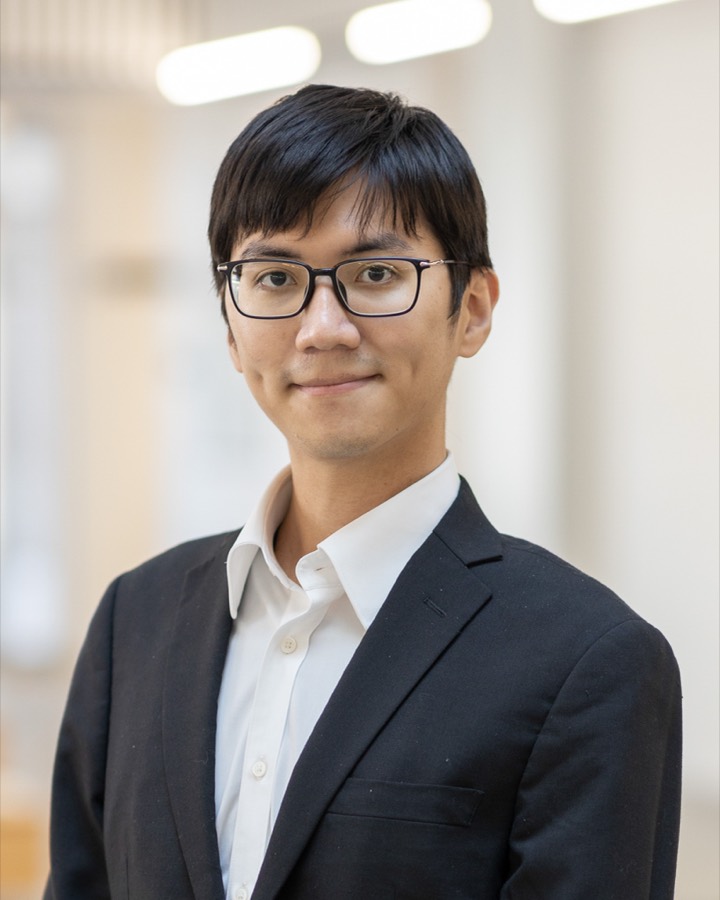
Phua Yin Kan Photo
phua_yinkan.jpg
2022 Cohort 2022年度
Q-ENERGY Fellowship · Cohort 2022 Q-ENERGYフェローシップ · 2022年度

Yin Kan Phua

Yin Kan Phua

Completed修了
Affiliation
所属
Graduate School of Engineering
工学府
Major / Department
専攻
Department of Applied Chemistry
応用化学専攻
Supervisor
指導教員
Prof. Koichiro KATO加藤 幸一郎 教授
§ 01

Doctoral research

博士 研究

Main PhD work 博士課程主研究

Development of a Chemically Explainable Machine Learning Model that Allows Membrane Materials Exploration for Anion Exchange Membrane Fuel Cell

Development of a Chemically Explainable Machine Learning Model that Allows Membrane Materials Exploration for Anion Exchange Membrane Fuel Cell

Beginning from functional polymeric materials such as anion exchange membranes (AEM) used in AEM fuel cells (AEMFC), this study plans on representing complete monomer structure of functional polymers in the form of graphs, and use graph neural networks with attention mechanism to improve prediction interpretability and accuracy of prediction model. Through this study, a prediction model that can feedback useful polymer structure design guidelines to experimentalist will be built, thereby realizing a model that is highly interpretable, generalizable and carries the ability to act as a materials design guideline for experimentalists. This study also helps to accelerate the realization of decarbonized society through contributing to the research and development of AEMFC, a type of FC that is essential to achieve the decarbonization goal.

Beginning from functional polymeric materials such as anion exchange membranes (AEM) used in AEM fuel cells (AEMFC), this study plans on representing complete monomer structure of functional polymers in the form of graphs, and use graph neural networks with attention mechanism to improve prediction interpretability and accuracy of prediction model. Through this study, a prediction model that can feedback useful polymer structure design guidelines to experimentalist will be built, thereby realizing a model that is highly interpretable, generalizable and carries the ability to act as a materials design guideline for experimentalists. This study also helps to accelerate the realization of decarbonized society through contributing to the research and development of AEMFC, a type of FC that is essential to achieve the decarbonization goal.

§ 02

Research achievements

研究 成果

Research Papers論文
  1. Phua Y.K., Terasoba N., Tanaka M., Fujigaya T., Kato K. “Orchestrating explainable AI, ChatGPT, and human expertise: a framework for extracting polymer design guidelines” Journal of Materials Chemistry A, Vol. 14, pp. 19675–19693 (2026) doi:10.1039/d5ta06120b
  2. Phua Y.K., Terasoba N., Tanaka M., Fujigaya T., Kato K. “Unsupervised Machine Learning-Derived Anion-Exchange Membrane Polymers Map: A Guideline for Polymers Exploration and Design” ChemElectroChem, Vol. 11, e202400252 (2024) doi:10.1002/celc.202400252
  3. Wu D., Kayo N., Jayawickrama S.M., Phua Y.K., Tanaka N., Fujigaya T. “Effect of alcohol content on the ionomer adsorption of polymer electrolyte membrane fuel cell catalysts” International Journal of Hydrogen Energy, Vol. 48, pp. 5915–5928 (2023) doi:10.1016/j.ijhydene.2022.11.116
  4. Phua Y.K., Fujigaya T., Kato K. “Predicting the anion conductivities and alkaline stabilities of anion conducting membrane polymeric materials: development of explainable machine learning models” Science and Technology of Advanced Materials, Vol. 24, 2261833 (2023) doi:10.1080/14686996.2023.2261833
  5. Yoshihara R., Wu D., Phua Y.K., Nagashima A., Choi E., Jayawickrama S.M., Ishikawa S., Liu X., Inoue G., Fujigaya T. “Ionomer-free electrocatalyst using acid-grafted carbon black as a proton-conductive support” Journal of Power Sources, Vol. 529, 231192 (2022) doi:10.1016/j.jpowsour.2022.231192
  6. Phua Y.K., Dhammika Weerathunga D.T., Wu D., Kim C., Jayawickrama S.M., Tanaka N., Fujigaya T. “Effect of carbon nanotube-based catalyst layer surface roughness on polymer electrolyte membrane fuel cell performance” Sustainable Energy and Fuels, Vol. 6, pp. 4636–4644 (2022) doi:10.1039/d2se00857b
  7. Weerathunga D.T.D., Jayawickrama S.M., Phua Y.K., Nobori K., Fujigaya T. “Effect of polytetrafluoroethylene particles in cathode catalyst layer based on carbon nanotube for polymer electrolyte membrane fuel cells” Bulletin of the Chemical Society of Japan, Vol. 92, pp. 2038–2042 (2019) doi:10.1246/bcsj.20190208
Conference Presentations学会発表
  1. Yin Kan Phua, “Explainable AI in functional polymer materials: applications and open challenges,” 10th Workshop, Decarbonization Society in Kyushu (Q-DeCS), Kyushu University, Ito Campus, Nov. 2024. [Domestic, Oral]
  2. Yin Kan Phua, 「機能性高分子材料分野における説明可能AIの適用と課題」, 九州脱炭素化研究会 第10回ワークショップ, 九州大学伊都キャンパス, 2024年11月. [国内, 口頭]
Other Achievementsその他の業績
  1. Coming soon準備中
Programme & institutional affiliation プログラム・機関情報
K2-SPRING JST SPRING programmeJSTスプリングプログラム
Q-PIT Unit coordinatorユニットコーディネーター
Q-Energy Innovator Unit Q-Energy Innovator Unitグリーンイノベーションユニット

Kyushu University Host universityホスト大学