K2‑SPRING Q-ENERGY Innovator Unit グリーンイノベーションユニット
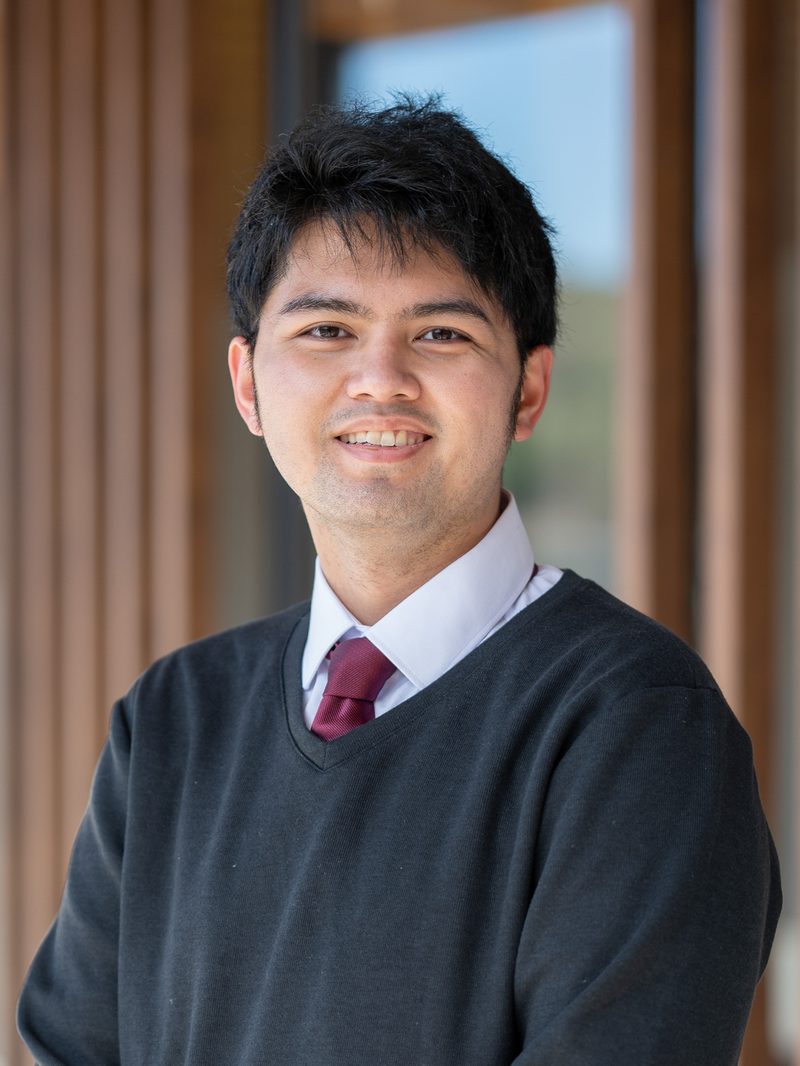
Muhammad Irfan Maulana Kusdhany Photo
kusdhany_irfan.jpg
2022 Cohort 2022年度
Q-ENERGY Fellowship · Cohort 2022 Q-ENERGYフェローシップ · 2022年度

Muhammad Irfan Maulana Kusdhany

Muhammad Irfan Maulana Kusdhany

Completed修了
Affiliation
所属
Graduate School of Integrated Frontier Sciences
統合新領域学府
Major / Department
専攻
Department of Automotive Science
オートモーティブサイエンス専攻
Supervisor
指導教員
Prof. Masamichi NISHIHARA西原 正通 教授
§ 01

Doctoral research

博士 研究

Main PhD work 博士課程主研究

Data-Driven Design of Carbon Materials for Hydrogen Storage

Data-Driven Design of Carbon Materials for Hydrogen Storage

In the transport sector, decarbonization is mainly done by converting combustion vehicles to battery electric vehicles. However, the low gravimetric energy capacity and long recharging times of batteries necessitate another solution for heavy duty transport. Hydrogen can fulfill this role due to its high energy density and quick refueling capability. One remaining issue is its storage: hydrogen has a low volumetric density. Thus, it needs to be either compressed to 70 MPa or liquefied to be stored on-board. Unfortunately, these solutions still suffer from low efficiency and high costs.
I study an alternative method of hydrogen storage: densifying hydrogen by adsorbing it onto high surface area carbons. This method is cheaper than 70 MPa compression, and it loses less energy than liquefaction. To further improve the materials used, I use data science techniques to clearly quantify the processing-structure-property relationships affecting the hydrogen uptake performance of high surface area carbon materials.
In the transport sector, decarbonization is mainly done by converting combustion vehicles to battery electric vehicles. However, the low gravimetric energy capacity and long recharging times of batteries necessitate another solution for heavy duty transport. Hydrogen can fulfill this role due to its high energy density and quick refueling capability. One remaining issue is its storage: hydrogen has a low volumetric density. Thus, it needs to be either compressed to 70 MPa or liquefied to be stored on-board. Unfortunately, these solutions still suffer from low efficiency and high costs.
I study an alternative method of hydrogen storage: densifying hydrogen by adsorbing it onto high surface area carbons. This method is cheaper than 70 MPa compression, and it loses less energy than liquefaction. To further improve the materials used, I use data science techniques to clearly quantify the processing-structure-property relationships affecting the hydrogen uptake performance of high surface area carbon materials.

§ 02

Research achievements

研究 成果

Research Papers論文
  1. Kusdhany M.I.M., Vorokhta M., Sasaki K., Nishihara M., Lyth S.M. “Solvent-Driven Pore Engineering in Coffee-Derived Activated Hydrochar: Implications for Post-Combustion CO2 Capture” Carbon Energy, Vol. 8, e70141 (2026) doi:10.1002/cey2.70141
  2. Kusdhany M.I.M., Amarasinghe S.I., Maus S., Sasaki K., Nishihara M., Lyth S.M. “An open-source Python package for lumped parameter modeling of sorbent-filled storage tanks for Hydrogen, CO2, Methane, and other fluids” International Journal of Hydrogen Energy, Vol. 150, 149793 (2025) doi:10.1016/j.ijhydene.2025.05.423
  3. Vorokhta M., Kusdhany M.I.M., Švábová M., Nishihara M., Sasaki K., Lyth S.M. “Hierarchically porous carbon foams coated with carbon nitride: Insights into adsorbents for pre-combustion and post-combustion CO2 separation” Separation and Purification Technology, Vol. 354, 129054 (2025) doi:10.1016/j.seppur.2024.129054
  4. Vorokhta M., Kusdhany M.I.M., Vorochta M., Švábová M., Nishihara M., Sasaki K., Lyth S.M. “Acetone adsorption on hierarchically porous carbon foams: Effect of nitrogen doping and oxygen functional groups” Chemical Engineering Journal, Vol. 521, 166784 (2025) doi:10.1016/j.cej.2025.166784
  5. Vorokhta M., Kusdhany M.I.M., Vöröš D., Nishihara M., Sasaki K., Lyth S.M. “Microporous carbon foams: The effect of nitrogen-doping on CO2 capture and separation via pressure swing adsorption” Chemical Engineering Journal, Vol. 471, 144524 (2023) doi:10.1016/j.cej.2023.144524
  6. Kusdhany M.I.M., Ma Z., Mufundirwa A., Li H.-W., Sasaki K., Hayashi A., Lyth S.M. “Hydrogen and carbon dioxide uptake on scalable and inexpensive microporous carbon foams” Microporous and Mesoporous Materials, Vol. 343, 112141 (2022) doi:10.1016/j.micromeso.2022.112141
Conference Presentations学会発表
  1. Kusdhany M.I.M., Lyth S.M. “Machine Learning as a Tool for Interpreting Variables in Hydrogen Sorption Data” Proceedings of WHEC 2022 – 23rd World Hydrogen Energy Conference, pp. 590–592 (2022) [international, oral]
Other Achievementsその他の業績
  1. Coming soon準備中
Programme & institutional affiliation プログラム・機関情報
K2-SPRING JST SPRING programmeJSTスプリングプログラム
Q-PIT Unit coordinatorユニットコーディネーター
Q-Energy Innovator Unit Q-Energy Innovator Unitグリーンイノベーションユニット
Kyushu University Host universityホスト大学