May 25, 2026
Eventイベント
Two Fellows Presented at the 19th Q-DeCS Workshop — May 25, 2026
九州脱炭素化研究会 総会及び第19回ワークショップ(2026年5月25日)— ユニット生2名が研究発表
Rika Iriguchi and Xianzhe Yang presented their doctoral research at the 19th Workshop of the Decarbonization Society in Kyushu (Q-DeCS), held on Monday, 25 May 2026 at Nakayama Hall on the Ito Campus and streamed online, following the society's annual general meeting.
2026年5月25日(月)に九州大学伊都キャンパス・中山ホールにてハイブリッド開催された「九州脱炭素化研究会(Q-DeCS)総会及び第19回ワークショップ」にて、ユニット生の入口梨佳さんと楊賢テツさんが博士研究の発表を行いました。
The Decarbonization Society in Kyushu (Q-DeCS) held its annual general meeting and 19th workshop on Monday, 25 May 2026, from 13:30 to 18:05 at Nakayama Hall, Jonathan KS Choi Cultural Center of Japan, Kyushu University Ito Campus. After the general meeting, the afternoon ran from a special lecture on the power-system challenges of next-generation solar cells through an invited talk on redesigning livestock systems for decarbonization and three decarbonization research-seeds talks, and closed with a doctoral research session in which two fellows of the Q-ENERGY Innovator Unit presented: Rika Iriguchi, of the Department of Earth Resources Engineering, and Xianzhe Yang, of the KU–PNU International Joint Graduate Program in Urban and Architectural Studies. That session was chaired by Associate Prof. Roman Selyanchyn of Q-PIT.
2026年5月25日(月)13:30〜18:05、九州大学伊都キャンパス・日本ジョナサン・KS・チョイ文化館 中山ホールにて、九州脱炭素化研究会(Q-DeCS)の令和8年度総会及び第19回ワークショップが開催されました。総会に続き、次世代太陽電池の社会実装に向けた電力システムの課題をテーマとする特別講演、脱炭素社会に向けた畜産システムの再設計に関するリクエストテーマ講演、脱炭素研究シーズ紹介3件と続き、最後の「博士研究紹介」では、Q-ENERGYイノベーターユニットから2名が登壇しました。工学府 地球資源システム工学専攻の入口 梨佳さんと、人間環境学府 九州大学・釜山大学校都市・建築学国際連携専攻の楊 賢テツさんです。同セッションの座長は、Q-PIT 准教授 セリャンチン・ロマンが務めました。
The two presentations spanned very different scales of the built environment. Iriguchi, supervised by Prof. Hideki SHIMADA, works on cement chemistry: applying CO2 nanobubble water to blast-furnace slag cement to promote carbonation, raising both early-age and 28-day strength while allowing a higher slag content — and so more CO2 fixed — without the usual strength penalty. Yang, supervised by Prof. Akihito OZAKI, works at the scale of whole buildings, developing general-purpose digital-twin software for building thermal environments that couples a detailed physics-based model with computational fluid dynamics.
2名の発表は、建築環境における異なるスケールにまたがるものでした。島田 英樹 教授のもとで研究する入口さんはセメント化学の観点から、高炉セメントにCO2ナノバブル水を適用して炭酸化を促進し、初期強度・28日強度をともに向上させつつ、高炉スラグの混合割合を高めてCO2固定量を増やせることを示しました。尾崎 明仁 教授のもとで研究する楊さんは建物全体のスケールから、詳細な物理モデルと数値流体力学(CFD)を連成させた、建築熱環境のデジタルツインを実現する汎用ソフトウェアの開発を進めています。
The workshop was held in hybrid format, with participants joining in person at Nakayama Hall and online, and closed with a networking reception at Kyudai Big Sando.
本ワークショップはハイブリッド開催され、中山ホールでの対面参加とオンライン参加の両方で行われました。終了後には九大ビッグさんどにて交流会が開催されました。
Event Details開催概要
Date日時Monday, 25 May 2026, 13:30–18:05 (JST)令和8年5月25日(月)13:30〜18:05
Venue場所Nakayama Hall, Jonathan KS Choi Cultural Center of Japan, Kyushu University Ito Campus — hybrid (reception at Kyudai Big Sando)九州大学伊都キャンパス 日本ジョナサン・KS・チョイ文化館 中山ホール ※ハイブリッド開催(交流会:九大ビッグさんど)
Event名称Decarbonization Society in Kyushu (Q-DeCS), Annual General Meeting & 19th Workshop九州脱炭素化研究会 総会及び第19回ワークショップ
Presenters from the Unitユニットからの発表者
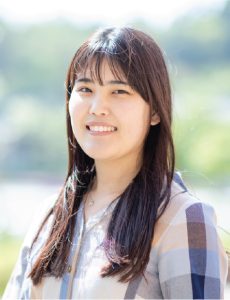
Rika Iriguchi入口 梨佳
Effects of applying CO2 nanobubble water to blast-furnace slag cement on CO2 fixation and material properties
高炉セメントへのCO2ナノバブル水の適用がCO2固定および材料特性に及ぼす影響
The cement industry accounts for roughly 7% of global CO2 emissions, making decarbonization an urgent challenge. Blast-furnace slag (BFS) cement helps reduce those emissions, but a higher BFS content is known to lower early-age strength. This research evaluated the strength and reaction characteristics of blast-furnace slag cement treated with CO2 nanobubble water (CO2NB water), which promotes carbonation. Applying CO2NB water accelerated carbonation, improving 28-day strength by 10–20% and also improving early-age strength. This makes it possible to increase the BFS content — and so fix more CO2 — without the usual strength penalty, contributing to lower-carbon cement materials.
セメント産業は世界のCO2排出量の約7%を占めており、脱炭素化が喫緊の課題である。高炉スラグ(BFS)を混合した高炉セメントはCO2削減に有効だが、混合割合の増加に伴う初期強度の低下が懸念されている。本研究では、セメント中の炭酸化反応を促進するCO2ナノバブル水(CO2NB水)を用いて、高炉セメントの強度および反応特性を評価した。その結果、CO2NB水の適用により炭酸化が促進され、28日強度が10〜20%向上し、初期強度も改善された。これにより、強度低下を抑えつつBFSの混合割合増加とCO2固定が可能となり、セメント材料の低炭素化に寄与することが示された。

Xianzhe Yang楊 賢テツ
Building environmental design through a digital twin of the building thermal environment
建築熱環境のデジタルツインによる建築環境設計
Toward the 2050 carbon-neutrality declaration, accelerating the energy efficiency of buildings calls for effective measures backed by high-precision, general-purpose numerical analysis tools that keep pace with advancing technology. This research uses DX (digital transformation) methods to develop general-purpose software realizing a digital twin of the building thermal environment, focused on two areas: the engine of a building thermal-environment analysis tool that couples a detailed, physics-based numerical model with computational fluid dynamics (CFD); and linking that analysis tool with building design software.
2050年カーボンニュートラル宣言に向け、建築物の省エネルギー化を加速化するための技術開発や実効性の高い取り組みが必要となり、先進技術に対応した高精度かつ汎用的な数値解析ツール開発が求められる。本研究はDX技術を用い、熱環境のデジタルツインを実現する汎用的ソフトウェア開発を目的とし、以下の2点を中心に開発を進める。先進技術に対応した建築熱環境数値解析ツールのエンジン開発(建築物理に則った詳細な数理モデルの開発、数値流体力学CFDとの連成解析方法の構築)、および建築熱環境数値解析ツールと建築設計ツールの連携。