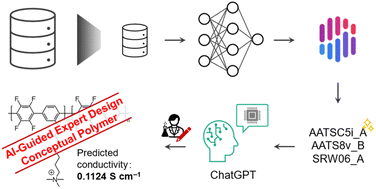
Artificial neural networks have demonstrated impressive accuracy in predicting polymer properties, but their internal decision-making processes have long been a "black box" — difficult to interpret even for the researchers who build them. This opacity limits the extent to which AI-generated predictions can be translated into real, actionable design knowledge.
人工ニューラルネットワークはポリマー特性の予測において高い精度を示してきましたが、その内部の意思決定プロセスは長らく「ブラックボックス」とされ、構築した研究者にとっても解釈が困難でした。この不透明さが、AIによる予測を実際の設計知識へと転換することを妨げてきました。
A research team at Kyushu University, led by Prof. Koichiro Kato and Prof. Tsuyohiko Fujigaya, with Q-ENERGY fellowship alumna Phua Yin Kan as lead author, has published a new framework that addresses this challenge directly. Their approach combines explainable AI techniques with ChatGPT and domain expert knowledge to systematically extract polymer design guidelines from neural network models — including models too complex for standard explainability methods.
九州大学の加藤幸一郎教授・藤ヶ谷剛彦教授が率いる研究チームは、Q-ENERGYフェローシップ修了生のPhua Yin Kanを筆頭著者として、この課題に直接取り組む新しいフレームワークを発表しました。このアプローチは、説明可能AI技術とChatGPT、および専門家知識を組み合わせ、ニューラルネットワークモデルからポリマー設計指針を体系的に抽出するものです。標準的な説明可能性手法では対応が難しい複雑なモデルにも適用可能です。
The target application is anion exchange membrane (AEM) materials — a key component in hydrogen fuel cells and water electrolysis systems. Using their framework, the team successfully identified concrete, quantitative design guidelines: the effectiveness of biphenyl structures and optimal side-chain configurations for maximising ionic conductivity.
応用対象は、水素燃料電池や水電解システムの重要部材であるアニオン交換膜(AEM)材料です。このフレームワークを用いて、研究チームはビフェニル構造の有効性やイオン伝導率を最大化するための最適側鎖構成など、具体的かつ定量的な設計指針を明らかにしました。
The researchers also released the underlying database and source code on GitHub, making the framework broadly applicable to other polymer design challenges.
また、基盤となるデータベースとソースコードをGitHub上で公開しており、他のポリマー設計課題にも幅広く応用できます。